
- (08) 6158 9988
0478 291 904 - 12/50 William Street. Beckenham. 6107
- connecting@aastha.com.au
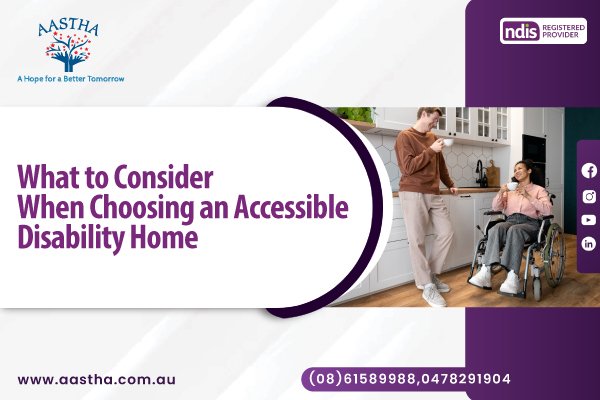
An accessible home should adapt to the person living in it, not the other way around. However, a property described as disability-friendly may not necessarily meet someone’s individual needs. What works well for one person could present significant challenges for another. This makes it essential to consider how a home will support everyday living, both now and as circumstances change.
Not everyone requires the same accessibility features. Some people may benefit from step-free access and wider doorways, others need specialised equipment or additional safety features. Under the NDIS, Specialist Disability Accommodation (SDA) includes four design categories: Improved Liveability, Fully Accessible, Robust and High Physical Support. Each addresses different accessibility and support requirements. For example, High Physical Support housing may include ceiling hoists, backup power and home automation technology, whereas Improved Liveability may provide better visual contrast between walls and floors as well as clear line of sight. Understanding these distinctions can help eligible participants identify properties that suit their needs. An accessible home should also make it easier to maintain everyday routines and community connections.
Participants should consider the property’s proximity to healthcare services, shops, public transport, workplaces and recreational facilities. It is also important to assess the surrounding environment. Accessible pathways, suitable transport options and convenient entry points can influence how independently someone can move around their neighbourhood. Most importantly, the availability of disability support is another important consideration. Some residents may require occasional assistance, while others need regular personal care or overnight support. Before choosing a property, clarify which services are available and how they will be delivered. Remember that SDA funding
covers eligible specialist housing, while supports such as Supported Independent Living (SIL) are funded separately.
As a registered NDIS provider in Perth, Aastha Community Services helps participants explore personalised disability support options that align with their needs and goals for independent living. We help participants understand accommodation costs, tenancy arrangements and available NDIS funding before making a decision regarding their disability accommodation options. With Aastha, participants make informed decisions about their future living arrangements and make the most out of their NDIS funding! Contact our team to discuss your requirements and available NDIS supports.
