
- (08) 6158 9988
0478 291 904 - 12/50 William Street. Beckenham. 6107
- connecting@aastha.com.au
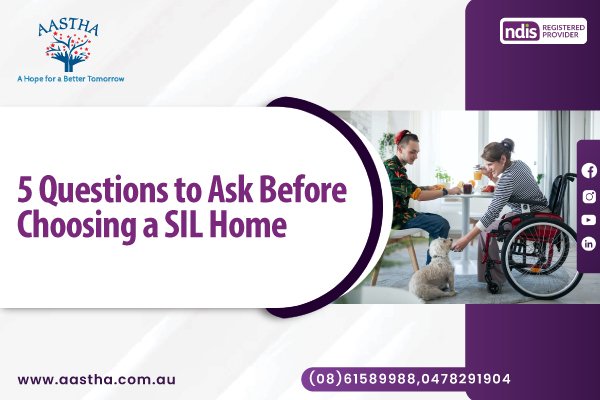
A SIL home can look right on paper and still feel completely wrong in everyday life. What matters is not simply the number of bedrooms, the location or how modern the property appears. The real difference comes from the way support is delivered, the level of choice available and the environment that allows a participant to live with confidence. Supported Independent Living is designed for people who need help or supervision with daily tasks at home. The support may include assistance with personal care, meal preparation, household routines and developing skills for greater independence. Choosing the right SIL accommodation therefore means looking closely at how the home and the support model work together. Here are five questions worth asking before you make the decision.
1. Does the Support Match My Individual Needs?
Start with what everyday life in the home will actually look like. The right SIL accommodation should provide appropriate assistance with personal care, meal preparation, household tasks and other daily activities while still encouraging participants to use and develop their own abilities. Support should be personalised to the participant rather than delivered according to a fixed routine. A suitable SIL home will take individual strengths, support needs, and NDIS goals into account, creating opportunities to build skills and become more independent over time.
2. Who Will I Be Living With?
The quality of SIL support depends heavily on the people providing day-to-day assistance. Ask about staff availability, experience, continuity of support and how the provider responds when your needs change. It is also important to check the provider’s registration status. Registration requirements for SIL providers A compatible household can make a considerable difference to how comfortable you feel at home. If the SIL arrangement is shared, find out about the other residents and how compatibility is considered. Think beyond age or disability. Daily routines, interests, communication preferences, personality and expectations around shared spaces can all influence whether a household works well. The NDIS allows SIL supports to be provided when living with other participants or, depending on a person’s disabilityrelated needs, when living alone.
3. How Much Choice Will I Have in Everyday Life?
Moving into supported accommodation should not mean giving up control over your routine. Ask what happens if you want to sleep in, cook a particular meal, invite someone over or spend your afternoon differently from the other residents. A suitable SIL arrangement should make room for your choices while providing the support you need to live safely and confidently.
4. Who Will Be Providing My Support?
changed from 1 July 2026, and SIL providers must be registered or take the required steps to register under the new requirements.
5. Does This Home Fit the Life I Want Outside It?
Your life should not be confined inside the house. Consider where the property is located and whether you can stay connected with family, friends, work, study, appointments, favourite activities and the wider community. A beautiful house may not be the right home if its location makes the things that matter to you harder to access. Think about both your current routine and where you would like greater independence to take you in the future.
There is no single version of independent living that works for everybody. The right arrangement brings together suitable support, compatible living arrangements and opportunities to make everyday choices. As a registered NDIS SIL service provider, Aastha Community Services takes a person-centred approach to Supported Independent Living across Western Australia. Before choosing a SIL home, ask questions, explore your options and consider how the arrangement will work on an ordinary day and not just how it looks during the first inspection. Contact us today to access NDIS supported independent living support and services!
